Showing posts with label Reading Diary A. Show all posts

Tuesday, April 26, 2016

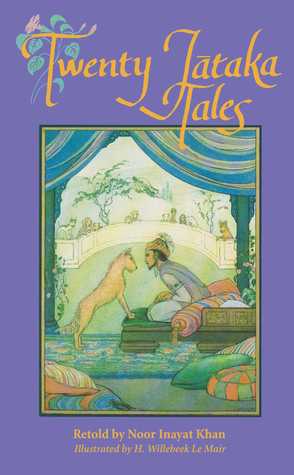
Week Fourteen Reading Dairy: Twenty Jataka Tales, Noor Inayat


Similar to More Jataka Tales written by Ellen C. Babbitt, Twenty Jataka Tales features a few different stories as well as some previously written by Babbitt. 

The Tortoise and the Geese
Two geese who were friends of the tortoise wanted to take him on a trip.  Both geese held a stick between them and the tortoise held on to the stick with his mouth.  When they were flying in the air the tortoise heard children laughing and yelled with anger.  He fell onto the palace grounds and broke his shell.

The Guilty Dogs
A king’s royal chariot was ruined due to his dogs chewing on the leather straps.  He ordered that all dogs in his city were to be killed except his own.  A chief dog from the city found a solution to opening the king’s eyes of his royal dogs’ wrong doing.

The Golden Feathers

Is a similar to Ellen C. Babbit’s The Golden Goose. However, this story is much grim. The father is able to help bring fortune to his family.  He turns into a goose with golden feathers, but his wife becomes filled with greed. 

Wednesday, April 20, 2016

Week Thirteen Reading Diary: More Jataka Tales, Ellen C. Babbitt


More Jataka Tales written by Ellen C. Babbitt, is a continuation of her first volume of the tales.  These stories are a combination of Aesop fables and fairy tales.  Each story expresses a message pertaining to vanity, greed, pride, or generosity. 

The Girl Monkey and the String of Pearls
A queen and her friends went for a swim in the lake.  The servant who was guarding the queen’s jewels fell asleep and noticed her pearls were missing.  She thought jewels had been taken from a man, but no man had entered the guarded gate.  A guard came up with the idea of placing beaded necklaces around the courtyard to find the thief.  Monkeys from all around were happy to show off their new necklaces except for one, who stole the queen’s pearls.

The Golden Goose
A goose with golden feathers gave his feather to a poor woman and her two daughters. The mother of the daughters became greedy and wanted to catch the goose and rip out all of his golden feathers.  One day when he visited the family, the mother caught the goose and ripped his feathers away.  The gooses feathers grew back white, and never turned to gold.

The Red-Bud Tree
Seeing the same thing but gaining a different perspective as time passes.

The Otters and the Wolf
Two otters fought over the ends of a fish, but were swindle by a wolf who taught them a lesson in greed. 

Wednesday, April 13, 2016

Week Twelve Reading Diary: The Sacred Tales of India,Dwijendra Nath Neogi


The Sankata Ceremony
The Gift of the Ascetic

A king married three wives that bore him no children.  The townspeople believed that an omen had been placed on him.  One day a yogee came to the palace with a drug for the king and his wives.  He told the king that this drug would help his wives bear children but he must give one child to him.  The king told his wives to share the elixir equally, but that did not happen.  The first two wives greedily took the elixir and left the last wife with a drop.  Raged with jealousy she licked the vial until it shone. The first two wives bore children and the last a conch. 

She kept the shell, and for three nights it split into two and a young man came from within.  She kept this to herself, not uttering a word to anyone.  When the secret was found out, the young prince would be tested by the yogee.  His mother called upon Sankata-Narayan for help. Sankata-Narayan promised the queen that her son would return.

The prince went with the yogee and was told to never travel south from the cottage where they would stay.  One day the prince wandered and found a young maiden who he would later marry.  The maiden told him that the yogee sacrifices people for the goddess Kali and they both were to be the next sacrifices for the Tantrik.

The Kula-Mangalbar Ceremony
The Sun’s Twin Sons

Jokai, a young woman with much piety was shown favor by the king.  He lavished her with gifts after granting her the appearance of the sun.  In order for the sun to shown, Jokai gave promised herself to the sun god and became his wife.  She bore two male children, Sukli and Akli.  During the day they were in liquid form and at night in human form.  Jokai has her sons live in a tree, and when they did so, they would scare people who would walk underneath the branch, for they could not see the young boys.

The Dan-Sankranti Ceremony
The Consequences of Generosity

A very wealthy Brahman woman was friends with a poor milk maid.  She prayed upon Narayan, and was blessed with great wealth.  Her friend asked if she could borrow the image of Narayan and too be blessed with great riches.  The Brahman agreed, and soon saw her wealth diminish.  She and her husband were no longer recognizable, and were treated badly by those who were their former tenants, friends, and even their own daughter.  The two were accused of stealing from those they stayed with, although they had not committed the acts.

After a year passes, the Brahman received the picture of Narayan back from her old friend, and began to praise the picture heavily.  She regained her wealth and confronted those who had done her wrong.  They all shared the same response, they has not recognized her and her husband they possessions they believed to be stolen reappeared out of thin air. 

The Brahman forgave them, for their acts and commenced with festivities.   

The Kalika Ceremony
The Brahman’s Ban

Indra, king of gods, was having a party and made the mistake of throwing flowers from a dancer upon a Brahman.  Out of disgust, the Brahman cursed Indra and sent his spirit to live within a car for twelve years.  Sachi, Indra’s wife, was away on a trip and did not know what happened to her husband.  When she returned the other gods had told her, so she went to see the Brahman in order to find her husband.

The Brahman could not reverse the curse, but told Sachi where Indra could be found.  He also told her to call upon Kalika.  Kalika could not reverse the curse but with Sachi’s permission, she out her and Indra to sleep until he became a man. 

The Satya Pir Pujah
The Pir’s Power

A poor Brahman encounters a man who tells him about Satya Pir.  He tells the Brahman to pray to Pir for riches since he is poor.  The Brahman refuses the idea and believes that it goes against his beliefs.  He cannot pray to Pir when Narayan is the one he has prayed to all of his life.

The Brahman gives in and prays to Pir and was blessed.  He shared the pujah with his neighbor Dhanapati. He was blessed with, and later a daughter by the name of Kalabati. When she became older, his daughter married Sankhapati, a young merchant. When Sankhapati and Dhanpati set to sail the seas, they went to the kingdom of Raja Kalandhi.  Here, they were sentenced to prison because the king’s daughter’s necklace was stolen. 

Kalabati and Lilabati, her mother, prayed to Pir and he sent a vision to the king when he was sleep.  The king released the men.  When the men returned home, their riches had disappeared.  Pir wanted to teach the men a lesson. Dhanapati prayed to Pir and was forgiven.  He possessions were returned to him.

The Subachani Ceremony
The Gander-eater

A poor Brahman has a son by the name of Satybrata.  After talking to his friends from school about what they eat, he goes home and questions his mother.  Not satisfied to hear they are poor and vegetables are the only thing that she can afford, Sasybrata steals from the king.  Knowing the bird that he brings home is stolen, she does not question her son, but prepares it for dinner. The kinsmen locate the feathers of the bird near the Brahmans house and imprison her son. 

The Brahman encounters women who are worshipping Subachani.  They show her how to perform a pujah, and she does so.  She asks Subachani to help free her son, and she does so.  She visits the king in his dream and tells him to free Satybrata, wed him and his daughter Sakuntla, and give Satybrata half of his kingdom.  The king follows Subachani’s oders, and they all remain faithful to Subachani through worship.

Bibliography: The Sacred Tales of India by Dwijendra Nath Neogi (1918)
Wednesday, April 6, 2016

Week Eleven Reading Diary: Sacred Tales of India, Dwijendra Nath Neogi


The Manasa or Naga-Panchami Ceermony
The Divine Brothers

Lahana was the seventh wife of the youngest son whose father was a farmer. She did not have any living relatives like her sister-wives.  One day when she and her sister-wives left their home to bathe, they spoke of the things that they wanted out of life.  The wised for possessions and to live in the homes of their biological fathers.  Lahana was unable to wish for such things because she possessed nothing. 

Her sisters convinced her to think of something, anything that would make her happy.  She wished for a good meal that consisted of two fish and time off from work.  Upon walking home, the two fish that she thought out appeared in front of her.  Her sister told her to gather the fist in her skirt and cook them for herself after she cooked dinner.  Later that evening when she was done cooking for her family, she opened the basket where she left the fish.  The fish transformed into two snakes.  The snakes were Ahiraj and Maniraj, sons of Padma Rani.

Lahana took care of the snakes and fed them.  Because of her kindness, they granted her a life full of riches, possessions, and most of all a family.

The Savitri Ceremony
Snatched from Death

Savitri was the daughter of King Asvapati of Ujjayinee.  She was born to the queen after her father prayed to the gods a committed a great Putreshti sacrifice.  Her father wanted her to be happy and gave her the blessing of picking her own husband.  She chose a man by the name of Satyaban, who was a son of a hermit.

Satyaban is not a hermit, but the son of King Dyumastena. If Savitri were to marry Satyaban, he would die within a year of the marriage.  It was declared that she would marry him after much deliberation between her, her father, and Narada. 

Savitri moves to the forest after her wedding, and lives with her new family.  W hen Satyaban falls to his death, Savitri encounters Lord Yama.  She pleads to Yama to bring him back to life but Yama assures her that he cannot.  He grants Savitri three boons.  With each wish that she makes, Yama is granting life to Satyaban.  When Yama realizes that he has been tricked, gives up his charm to Savitri.  Savitri takes Satyaban home, where they live their happy ever after.

The Itu Ceremony
Buy It’s Favor

A Brahman who was known for gluttony asked his wife to make cakes.  Two had been given to his daughters Rama and Isani.  The Brahman banished the girls by taking them to the forest.  When they awoke, they encountered women who were praying to Itu.

The women showed them how to pray.  Rama and Isani wished for their father to become wealthy and be given a son.  Later, they went back home and found that their father was wealthy and alive.

The girls were married off and Isani stopped praying to Itu, but Rama continued.  Isani suffered greatly.


Wednesday, March 30, 2016

Week Ten Reading Diary: The Mahabharata, Peter Brook

Part C - Vyasa describes the life of the Pandava brothers lives while living in secrecy and the awakening of Krishna.

As Vyasa continues to tell the story to the young boy, Krishna appears and consults with Vyasa about his future.  Vyasa assures Krishna that he can change the path of his life and that nothing is ever set in stone.  People have the ability to change and live a life that possesses great spiritual awakening and health. I begin to see the story as Narayan told it in his book.  The Pandava brothers have taken on their new roles in their lives as they live incognito in king Virata’s palace. 


Yudhisthria has become an expert in the game of dice, and has been able to possess self control when playing the game. Out of all of the brothers, Bhima could no longer live in disguise.  Draupadi felt that her husband’s betrayed her and their lives are not what they should be.  Kichaka, the brother-in-law of king Virata challenged Draupadi.  He wanted to call her his own, and lay with her to establish their bond.

As this scene continues differences are soon recognized.  In the Narayan's version, Draupadi is molested and asks for justice to be taken.  She wanted Kichaka to be charged.  Yudhisthria stands before Draupadi with the king, and agrees with king Virata that an investigation must take place before any action can be taken against Kichaka.  Draupadi tells Bhima, and Bhima attacks Kichaka. He kills him by squeezing him to death.

In the movie, Draupadi does not go before king Virata.  Instead, she sets a trap for Kichaka.  She tells him that she will meet with him later, and become his. When she leaves Kichaka’s room after he agrees, she tells Bhima that she is disappointed in all of her husbands. She tells Bhima that he must defend her and show that he is the best husband.  Bhima hides in Kichaka’s room underneath his covers and excites him as he pretends to be Draupadi.  Bhima then reveals his true self, and kills Kichaka in the name Draupadi.

There is much poetry that is expressed in this part of the movie in comparison to part a and b. A vast majority of it is through the character of Krishna.  Krishna’s character starts to develop into a character that questions his self, and the lives of others. 


Bibliography: "The Mahabharata" directed by Peter Brook (1989)
                     " The Mahabharata" written by R.K. Narayan (1978)

Wednesday, March 23, 2016

Week Nine Reading Diary: The Mahabharata, Peter Brook

When I read The Mahabharata written by R.K. Narayan, I did not like it in comparison to The Ramayana. I thought about giving the Mahabharata another shot, by watching the theatrical version by Peter Brook.  It was very different in a sense, yet I have enjoyed watching the movie so far.  I enjoyed the versatility of the cast, and the dramatics they presented.  Not to mention one of my all time favorite actresses Erika Alexander played the roles of Madri and Hidimbaa. I cannot wait until I watch part two later this week. 


In part one of the movie The Mahabharata, Vyasa the poet, begins the tale of the epic. The movie is told as a narration, and Vyasa  is searching for an individual who able to write, which I thought was rather strange.  In my mind, I portrayed Vyasa as a person of high intellect and who was literate. However, Lord Ganesha appears out of nowhere and begins to record the story as Vyasa narrates Vyasa's character in the movie is true to the character in the written tale in a sense.  His appearance is disheveled and the princesses that he met with carnally treat him with dislike and disgust.


The story of the birth of the Kaurava's was strange.  Dhritarashtra ordered her servant to beat her stomach with an iron rod because she felt movement.  After holding “life” in her stomach for two years she could not wait any longer for the life of her child to be real.  After her servant beats her stomach, a large black ball rolls across the floor symbolizing the “ball of flesh”.  It is cool to the touch.  Similar to the written version by R.K. Narayan, Dhritarashtra wants to throw the ball of flesh out.  Bhisma saves the flesh and tears it into one hundred pieces.  He sprinkles water over the flesh and puts the flesh into multiple jars. 


Omens are then presented.


Bibliography: "The Mahabharata" directed by Peter Brook (1989)
                       "The Mahabharata" written by R.K. Narayan (1978)

Wednesday, March 2, 2016

Week Seven Reading Diary: The Mahabharata, Epified

Epified TV in India’s version of the epic The Mahabharata was more entertaining than the book in my opinion, which is strange for me since I generally choose reading over watching movies and videos.  What made Epified stand out is the drama and suspense that it delivers to its audience.  The music and the tone of the author’s narration enhanced the story’s tale, in addition to the drawing of the scenes which provided a visual aid. 


The Mahabharata was broken up into seventeen different sections which offer a simplistic yet detailed view of the epic.  The author’s highlighted the main points of the story including things that I particularly did not catch; such as Amika’s deliverance of her ninety-nine sons.  When I read the story, I do not remember her delivering a mass of flesh and wanting it to be sent out into the forest.  In Epified’s version, Bhisma takes the fleshy mass and breaks the mass into one hundred pieces and puts each piece into a large vase with liquid.  After time, these large pieces of flesh become children.  Because of Amika’s forsaken sight (recalled by Epified ), and Dhritarashtra’s blindness, they are unaware of the characteristics their children display.  Immediately, it is noticed by all including their uncle Bhishma that these boys are evil and show depravity.

Another difference that can be pointed out between The Mahabharata and Epified’s version is the story of Bhima.  The author’s focused on Bhima more so than Yudhistira and Arjuna, with the exception of Arjuna’s discovery of Ekalavya. Bhimas’s story was extraordinary.  With Duryodhana’s exhibit of jealous behavior and unsuccessful attempt in killing his cousin, Bhima continued to prevailed and was blessed with strength that was greater than any man. 


Bibliography: The Mahabharata written by R.K. Narayan (1978)
                     The Mahabharata narrated by Epified (2015)

Tuesday, February 23, 2016

Week Six Reading Diary: The Mahabharata, R.K. Narayan

The Pandava’s have successfully completed their twelve years in exile and last year of masquerade in Virata with the help of god Yama.  Yama disguised himself as a bird who forewarned the brothers not to drink the enchanted waters of his.  By dying thirst, Yudhistira’s brother all had disobeyed Yama’s advice and fell to their deaths. One by one each brother stumbled upon the dead body of another brother but saw the water as a way to regain their strength before killing the bird that placed a curse upon the brother who drank the water from before.  It was not until Yudhistira came near the waters, and listened to the words of god Yama.  Yudhistira completed the task that Yama had set for the brothers before him.  He had to ask a series of questions.  While reading, I pictured Yudhistira fading away because of his thirst, feeling weak and breathing shallowly. 


Yama tested Yudhistira on his character, knowledge of gods, faith, and beliefs.  After granting him a drink from the pool of water, Yama told Yudhistira if he could choose one brother to live who it would be.  Yudhistira showed selflessness in his decision and chose his younger brother Nakula. Nakula was his half brother, given to his by his stepmother.  Yudhistira felt that it would be proper to resurrect a son who did not share the same bloodline as his self, in order to let their lineage continue on.  Yama felt moved by Yudhistira’s decision and granted him the life of all of his brothers.  

Yudhistira and god Yama


Bibliography: "The Mahabharata" written by R.K, Narayan  (1978)

Wednesday, February 17, 2016

Week Five Reading Diary: The Mahabharata, R.K. Narayan

The Mahabharata is an epic take that takes place in ancient India.  In the beginning of the story we are introduced to the characters Santanu and Ganga.  Santanu is the King of Hastinapura, and one day he takes a walk by a river, and sees Ganga who is enchanting. King Santanu quickly asks Ganga for her hand in marriage, but Ganga tells him that she will only do so if certain conditions are met.  Ganga tells King Santanu the only way she will marry him, is if he promises not to question her actions.  Upon agreeing to this, Ganga and Sanantu marry and move into the palace.  Years pass and Ganga bears children, all boys.  Each time Ganga delivers a child, she takes the child to the river where her and Santanu met and she drowns them.  Over a period of time, Ganga drowned seven of their sons.  When she became pregnant again, she delivered the child and took him to the river.  Not understanding his wife’s actions, Santanu questioned Ganga.  Ganga told Santanu that she is the river goddess, and each child she bore was cursed to live a life in human form; because of this, she ended their punishment. Since Santanu questioned Ganga's actions before drowning their eight child Devarata, Devarata will live and Ganga will spend her lasting days at the river. 


In later chapters, King Santanu marries again and promises the throne to his second wife's children.  Obeying his father's wishes, Devarata does not challenge his father nor his stepmother Satyavathi.  Devarata receives the name Bhishma due to him vowing not to marry and have any children in respect towards his father's wishes, and is then blessed by the God's for taking and upholding his vow. When Bhishma's half brother dies, his stepmother calls upon her first son Vyasa who is a poet,  to bear children that will take Santanu’s place on the throne.  When Vyasa fathers children with the princesses that Bhishma finds him, he places curses on the children based on their mother’s behaviors during their interaction.  


Bibliography: The Mahabharata written by R.K. Narayan (1978)

Wednesday, February 10, 2016

Week Four Reading Diary: Sita Sings the Blues, Nina Paley

            Nina Paley’s rendition of The Ramayana is astonishing.  Sita Sings the Blues is a comedic satire in a sense, but is very much enjoyable.  The introduction to the movie is pleasant, and I love how she introduced the main characters in the beginning by showing their actions and interactions with each other without the use of words.  Paley used various images of each character, which I thought was interesting because after reading Narayan’s version of The Ramayana and researching images for each assignment, I was able to identify the characters easily without question. I did notice that Lakshamana did not play a role in the story as he did in Narayan’s version of the epic, and Paley’s version was very much straight to the point.  Paley did not give a lot of background information on the epic, but she gave enough for the audience to understand what was happening.

            Aside from Rama and Sita, we have three characters that are narrating the story.  These characters play an important role by recalling what time period the epic took place and details that may have happened between the characters by using gap-filling. What I like most about these characters is that they brought up things that I questioned when I was reading The Ramayana.    


            Ravana is seen as a foul and demented character, but not once did he force himself on Sita. Sita was held in captivity for months at a time, and each time that he visited her, he would only remind her that it would be him and her in the end.  I will point out that he used his female guards to torment her, but not once did he ever touch her.  Ravana was philosophical and he showed piety when he prayed, which are details that the narrators pointed out that readers often look over.


 Bibliography: "Sita Sings the Blues" Nina Paley (2008)
                        "The Ramayana" written by R.K. Narayan (1977)

Wednesday, February 3, 2016

Week Three Reading Diary: The Ramayana, R.K. Narayan

Beginning the second half of "The Ramayana", I find the characters Rama and Lakshamana evolving into human beings who possess strong will, determination, and overall display a brotherly love that is seen and expressed by the characters they encounter throughout the chapters, and to the reader of the story.

After the abduction of Sita, we are shown a Rama who remains strong and determined to find the love of his life.  He makes it his mission to save his wife even if means him dying in the process.  Journeying through the forest, both Rama and Lakshamana meet Hanuman and Sugreeva. Gaining a relationship built on trust later turning into a friendship, Rama decides to help Sugreeva defeat his brother Vali in winning back his place as king. When Sugreeva summons Vali  to fight, his brother is stopped by his wife (formally Sugreeva's wife) in their cave.  Vali's wife tells him  not to fight because death will be his fate. Vali questions his wife's faith in him and states, "you have the elegance of a peacock and the voice of a nightingale...[but] have you forgotten that whoever confronts me gives me half of his strength" (pg 97)
 
When Vali leaves his cave and confronts his brother, it is Rama who pierces his heart with an arrow killing him.  Vali questions Rama's actions and asks why he interferes with family affairs when he has problems of his own that he should be concerned with.  Due to the death of Vali, Rama, Lakshamana, Hanuman, and Sugreeva become allies devoting themselves to finding Sita.


 As months pass, Rama becomes vulnerable and depressed believing that his allies have betrayed his trust. The rainy season begins in the forest and a pact is made to find Sita when the season ends. Rama and Lakshmana continue to reside in the forest while Hanuman and Sugreeva leave them to live in Kishkinda, where they will remain in a palace.  The rainy season takes a toll on Rama, and the disappearance of the beauty that was once seen outside in the forest becomes a desolate dark place.


Becoming impatient, Rama becomes furious and tells his brother Lakshamana to leave and go to Kishkinda and question the intentions of their allies.  Reaching his destination,  Lakshamana is soon stopped by the female monkeys at the gates of the palace .  Wanting to know his intentions, he is questioned and becomes overcome with emotion thinking of his very own mother.  He is then told that his allies have searched for help with finding Sita but have not had any luck.


Bibliography: "The Ramayana" written by R.K. Narayan


Tuesday, January 26, 2016

Week Two Reading Diary: The Ramayana, R.K. Narayan

Because of my infatuation with the movie "A Little Princess” and I do admit I own a copy of the movie on DVD, I am able mesh the traits of the characters from “The Ramayana” with the characters that played in the movie.  Knowing the background story makes reading the Indian epic worthwhile and far more pleasing than what I have ever imagined.  

Dasaratha, who is the father of Rama, is the king of his land and a man of his word.  After not being blessed with children, he soon pleads and is blessed with four boys; Rama, Bharata, Lakshmana, and Satrughna.  He holds Rama closest to his heart, as a loving father should; however, you see that he favors him more in comparison to his other sons due to Rama's loyalty, kindness, compassion, and honesty.  Rama is a humble young man and obedient to all authority.  He does not make differences out of people and believes everyone should be treated with respect. This trait is often shown when he approaches the people of his country, and his stepmothers who he calls mother, as if they too have given birth to him like his own mother Kausalya.


Swooned out of giving Rama the throne by Bharatas' mother Kaikeyi, Dasaratha does not die because he is old.  He dies of a broken heart because of his son's obedience towards him and his stepmother Kaikeyi. 


Rama and Sita's love surpasses the feelings of infatuation.  They are what I consider the lovers of love.  Helpless romantics who fall in love from first sight, and are in constant thought of the person they have laid eyes on.  They have you wonder if the one you truly love thinks of you as much as you think of them.  Their bond of love has lasted through their reincarnations, and their relationship is built on strength and support, which is an example to all who have not experienced such.


Bibliography: "The Ramayana" written by R.K. Narayan